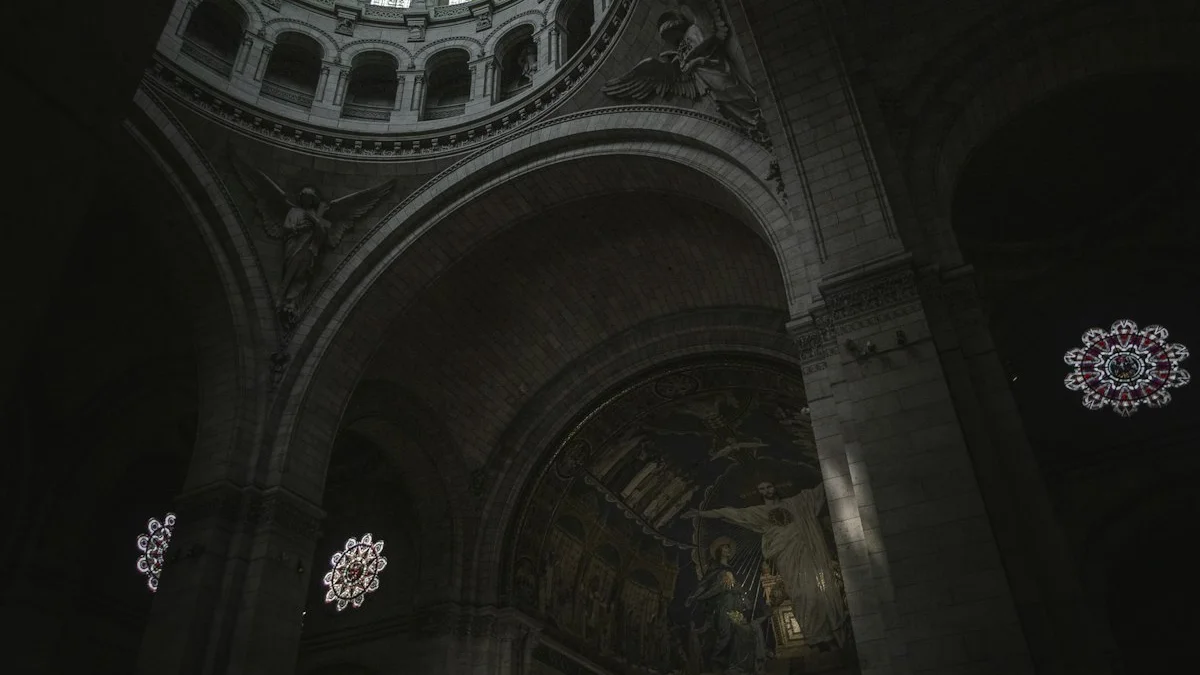
Imagine the job. Catalogue the private library of a dead man, at night, for poor pay, with no explanation offered. You are nineteen, you need the money, and you have no superstitions, so you say yes. That is how the Halloway Collection enters the story that becomes The Obsidian Key: not through a portal, but through a time sheet. This page walks the library as the book presents it, room by room and crate by crate, and the complete guide to the Obsidian lore holds the rest of the world in order.
Key takeaways
- The Halloway Collection is the private occult library of a dead collector, catalogued at night by the nineteen-year-old narrator.
- The house was opened at night because, as the executor put it, the house sat better that way.
- An unlabeled crate in the cellar held the Obsidian Folios, hand-copied manuscripts in covers like cooled tar.
- The collector’s wealth is later named as the residue of an attention that had nowhere to leak.
- The library is a portrait of the Closed Circuit rendered in shelves, dust, and paper.
The Halloway Collection: a dead man’s library
The book opens its autobiographical thread with a date and a job.
“I was nineteen when I took the night shift cataloguing the Halloway Collection.”
The definition follows a breath later, and it is deliberately unromantic.
“The Collection was the private occult library of a dead man whose name meant nothing to me then.”
His estate needed a cataloguer. The pay was poor. The hours were nights, and the executor’s only reason, offered without further explanation, was that the house sat better that way. A stranger to the lore might file that phrase under gothic decoration. The book files it under fact, and the rest of the chapter quietly explains why a house full of sealed attention might indeed sit better in the dark.
Notice also what the narrator says about the entrance: nothing about it felt remarkable on any single night, and that is how the unusual gets into a life, through doors that look like work.
Night one: the key under the stone
The house stands back from its road behind a gravel drive, behind trees that keep it in half-dark even under a full moon. The arrangements are already made: a key, a stone, a position.
“a man who hides keys under stones has already told you what kind of house this is”
Inside, the inventory of atmosphere is short and exact.
“Inside: dust, paper, and pipe smoke soaked so deep into the shelves that the rooms remembered him.”
A green-shaded lamp over the work table. An instruction sheet in a neat, cold hand, and the sheet is famous in the lore for its brevity.
“It said two things. Catalogue. Do not read.”
The narrator logs his hours in a ledger, unwraps nothing, and catalogues through the ordinary sounds of an old structure for the whole of that first night without reading a single book. Then comes the sentence that separates the book from every haunted-house story it resembles.
“I want to be honest about the fear. There was none. That frightened me later, when I understood what should have been there.”
The dread arrives late, when the narrator understands what the absence of dread means about the house, and about him.
The crate that was not on any inventory
For three weeks the work is uneventful. Reports go out weekly to an address the narrator has been given. Then, in the fourth week, working the cellar stacks, he finds a crate that is not on any inventory: unlabeled, older than the others, the wood gone gray, the nails holding by habit rather than grip. He opens it because an unlabeled crate is a defect in a catalogue, and cataloguing is the job.
The contents get one of the book’s best sentences.
“Hand-copied, stitched at the spine, their covers dark and dense like cooled tar.”
Dozens of folios, in hands that change from volume to volume, different centuries of the same discipline written in a grammar of instruction: sit, attend, hold, wait. These are the Obsidian Folios, and the manuscript history of the folios follows them further back than the cellar can. The narrator does the professional thing; he catalogues them precisely and reads nothing that night, which the story marks as mattering more than he could easily convey.
Later, alone, he breaks the rule on the instruction sheet and reads one page. The page repays the transgression with a description no catalogue had prepared him for.
“The page did not describe the world. It described the world’s controls.”
A stilling instruction on that page does something to the room inside his head: the noise lowers like a lamp being turned down. Three days later, a letter he has dreaded for a month arrives already answered. The story never explains the mechanism here. It lets the sequence sit.
What the collection actually was
Years afterward, the narrator returns to those weeks and names what he had really been hired to do.
“It was years before I understood that I had been paid, at nineteen, to inventory a Closed Circuit, and that the wealth I was cataloguing was the residue of an attention that had nowhere to leak.”
The facts he recorded as eccentricities become, in hindsight, a diagram. The dead collector owned no television. He answered his correspondence once a week in a fixed hour. He received visitors by arrangement, briefly, and then the door closed again. Nothing in that list is mystical, and everything in it is architecture: attention gathered, contained, and spent only where its owner chose, until the residue was a fortune and a library to hold the fortune’s explanation.
This is why the lore treats the Halloway Collection as a character rather than a backdrop. The library is the man’s practice, made permanent in shelves. Who guards such libraries now extends the question outward, to the loose confederation that keeps such knowledge out of mass circulation.
Why the book begins here
The frame matters as much as the facts. The doctrine arrives as testimony rather than lecture: a man who took a night job, broke one rule, and spent the following decades paying for and preserving what he read. The reader is asked to do what the narrator was hired to do: catalogue what is actually there before deciding what it means.
The one page he read also sets the book’s central warning in place before any practice is taught. Access came before alignment, and the cost ran through his whole life; the visitor who tested him a year later, the fifteen years of transcription, the expulsion, all of it grows from a single unassigned page in a cellar. The story of the first night inside the house returns to that evening in closer detail; the details are all load-bearing.
Frequently asked questions
Is the Halloway Collection a real library
The book presents it through a first-person testimony that names no institution and locates no estate, and the lore treats the question with a certain pleasure: the collection is as real as its effects on the narrator, which the book documents at length. Readers who want the frame question addressed directly can look at how the book describes itself and decide what kind of evidence a confession can be.
Why was the house catalogued only at night
The executor’s explanation is the only one given: the house sat better that way. The book never improves on that sentence. A collection whose owner practiced containment for a lifetime reads as a house that prefers its own hours. The night shift is part of the inventory, not an obstacle to it.
What was inside the unlabeled crate
Hand-copied manuscripts later known as the Obsidian Folios: dozens of volumes, stitched at the spine, covered in a material compared to cooled tar, written in many hands across different centuries. They carry a grammar of instruction rather than argument, sit, attend, hold, wait, and they are the source the book’s epigraphs are drawn from.
Did reading one page really set everything in motion
The book presents the sequence, not a mechanism: one page read, a noise lowered like a lamp turned down, a dreaded letter answered before arrival, weekly reports read by someone, a test visitor, and then the Order. Whether the page caused the chain or merely revealed it, the narrator treats the reading as the hinge of his life, and the price he lists for it is not symbolic.
Can you read the Obsidian Folios themselves
Not in this edition. What the First Breach Edition offers is the doctrine the folios contain, transcribed, tested, and stripped of its gates, rather than photographs of the artifacts. The lore keeps the distinction deliberately: the folios are objects in a story, the teaching is a working manual, and the two are related the way a key is related to the door it was cut for.
This guide is educational and spiritual in nature. It is not medical, legal, or financial advice. If a practice brings up distress, speak with a qualified professional.
The library that kept its author
Every lore in this tradition begins with a room, and this one begins with a room that paid poorly and sat better at night. Catalogue it, the instruction said, and the narrator spent fifteen years learning what the instruction had protected. You can read the way he was hired to: slowly, in order, without skipping to the crate. If it is the working pages you want rather than the story, the toolkit keeps those; this page is only an inventory.
The whole narrative, from the gravel drive to the final word, is told in the author’s own hand in The Obsidian Key.