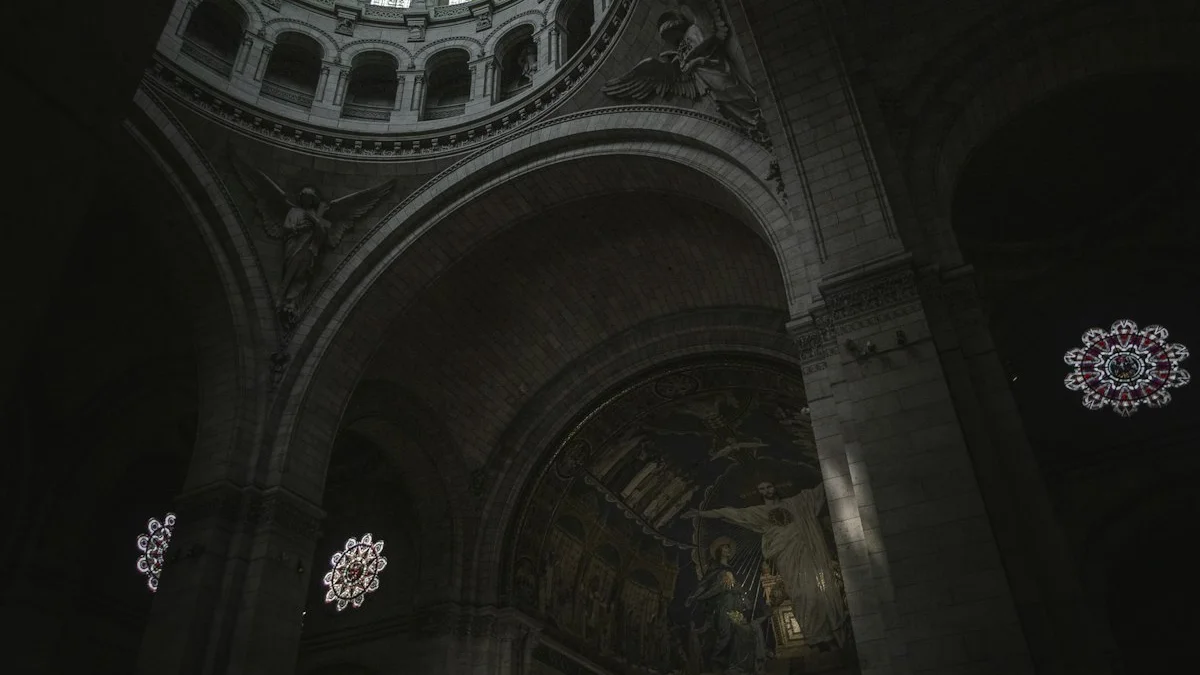
You bought the book expecting a shelf of techniques. Chapter one, visualize. Chapter two, repeat. Instead you find something with the proportions of a building: three parts, each with its own entrance, each demanding something different from you, and a narrator who keeps mentioning an archive you will never be shown. Before you decide whether to keep reading, it helps to see the floor plan. The obsidian key structure is deliberate from the first page, and once you see what each part is for, the order stops looking like an author’s habit and starts looking like an argument. This page walks the building room by room. The wider territory around it is kept in the folios lore guide.
Key takeaways
- The book has three parts: the Veil, the Nine Laws, and the Operations.
- Part I removes an explanation. Part II legislates. Part III assembles.
- No new doctrine appears after Part II. Part III is assembly, schedule, and repetition.
- One law practiced outranks nine laws merely known, and the book says so plainly.
- Every chapter opens with a fragment from the Obsidian Folios, and the fragments are themselves a map.
The obsidian key structure from above
Three parts, in a fixed sequence, each one useless without the ones before it.
| Part | Title | What it does | What you leave with |
|---|---|---|---|
| I | the Veil | Ends the explanation that the visible world is finished and final | A rebuilt premise: the world you see is output, not input |
| II | the Nine Laws | States one law per chapter: mechanics, recognition, operation | An instrument for each law, tuned on your own life |
| III | the Operations | Assembles the laws into protocols and schedules | A daily practice, a wealth working, a defense, and a repair manual |
The order is not decorative. A person who starts in Part III has instruments aimed at a premise they never rebuilt, and the instruments idle. A person who stops at Part I owns a beautiful diagnosis and no tools. The book is built like a lock workshop in sequence: first you learn what the lock is, then the laws of its tumblers, then the keys.
Part I: the Veil
Part I is the strangest section for a beginner, because nothing in it is practical. Four chapters, no techniques, no exercises to perform before bed. What it does instead is take apart the explanation of the world you were handed before you could refuse it: the belief that reality arrives ready-made, that your only freedom is your reaction to it. The narrator’s own account of the archive frames what a page like that can do.
“The page did not describe the world. It described the world’s controls.”
By the end of Part I you hold three pieces of machinery where you used to hold one vague word, universe: the Architecture beneath circumstance, the reason every attempt you ever made at manifestation collapsed, and the quiet confederation of Custodians who prefer that the machinery stay uncatalogued. Readers who have failed with manifestation methods before usually recognize themselves here first, which is why the territory is summarized for them in what the manifestation doctrine actually claims. Part I ends with a promise: the laws that make the machinery work are next, and they are nine.
Part II: the Nine Laws
The center of the book, and the part people quote. One law per chapter, each chapter built the same way: the law stated, its mechanics shown, its operation in your own week pointed out, and the working that turns it from a sentence into an instrument. The Folios announce their intentions in one line.
“The Folios do not argue. They legislate.”
Legislate is the right verb. Part II does not offer perspectives on abundance. It states operating conditions beneath circumstance, the way a building code stands beneath every room in a city whether or not anyone has read it. The Silent Center, the Assumed State, the Closed Circuit, and the rest arrive in a fixed order, each one standing on the last, and the book is blunt about how they should be consumed.
“A man who knows all nine and applies none of them has read an interesting book. A man who knows one and applies it has changed his position in the world.”
That sentence is the reading instruction for the whole part. One law at a time, practiced before the next is taken. If you want a preview of how the middle of the book moves before committing to it, the chapter-by-chapter notes in the Part II summary follow the same order.
Part III: the Operations
Part III is where the book stops teaching and starts scheduling. The laws told you what is true. The operations make it true for you.
“The laws tell you what is true. The operations make it true for you.”
Four instruments share the section. The daily protocol of the Key, the thirty-five minute practice performed morning and evening that gives the book its title. The twenty-one day Wealth Operation, built on the Opened Hand. The Shield Operation, which makes you expensive to attack. And a repair manual for the seven ways the work fails. The tone of the whole part is announced at its start.
“No new doctrine from here. Only assembly, schedule, and repetition.”
That sentence is also a warning worth hearing before you buy. If you are looking for one more idea to collect, Part III will feel repetitive. It is repetitive the way a gym is repetitive. The material was designed to be run, not admired, and the section assumes you finished the other two parts and are no longer arguing with the premise.
Which part answers your problem
Different readers are stuck at different floors, and the structure lets you locate yourself.
- You have tried everything and nothing moved. Techniques were never your problem; the premise underneath them was. Part I is your room. Read it twice if needed, though once usually does it.
- You know the ideas, quote them at dinner, and your life looks the same. Knowledge without operation. Part II, taken one law at a time with the practices actually performed, is where the stall breaks.
- You practiced for a while, drifted, and quietly stopped. You do not need new doctrine. You need Part III: a schedule, a protocol, and the repair manual for the exact way you quit.
- You are brand new to any of this. Read in order, first page to last. The book was assembled in sequence for you specifically, and skipping ahead trades a month of reading for a year of confusion.
Whichever floor you start from, the fragments at the head of each chapter repay attention. They are lifted from the Obsidian Folios themselves, and reading them as a sequence rather than as decoration is its own small education in the epigraphs of the Folios.
What this edition adds to the structure
One more thing separates this book from the manuscripts it claims to descend from, and the narrator is direct about the difference. The Folios were rations. This is the whole warehouse.
“A fragment excites. A manual arms.”
The First Breach Edition exists, by its own account, because someone finally transcribed the complete teaching rather than another leak of it: a complete, ordered, tested manual, stripped of gates, priced at the cost of a paperback. The doors in this edition are practical, not mystical, and what the edition is claiming for itself is examined closely in the First Breach Edition explained. Whether the frame around it is literal or teaching method is a question the book addresses openly, and it is worth reading that answer before deciding what kind of object you are holding.
Frequently asked questions
Do I have to read the parts in order
The book asks for it, and the request is structural, not fussy. Part III assumes the premise of Part I and the laws of Part II. Reading it first is like starting a symphony with the finale: the notes are all there and none of the meaning is. You can reread out of order afterward; owners do it constantly.
Where do the actual practices start
The first formal practice belongs to the laws in Part II, and Part III assembles the full daily protocol. Part I contains practices only in the sense that seeing the machinery differently changes how you walk through a day. Nobody sits down to visualize in the first four chapters, and that is by design.
Are the epigraphs part of the lore
Yes, and they are load-bearing. Each chapter opens with a fragment attributed to the Obsidian Folios, and the fragments together preview the argument of the book. Readers who collect and compare them end up with a summary of the whole doctrine written before the doctrine appears.
Is the three-part shape the doctrine or the narrator
Both, and the book keeps the seam visible. The teaching claims to descend from the Folios, while the narrator supplies the archive story around it. The book states early that its narrative frame is part of its teaching method, which lets you take the structure seriously without settling the archive question first.
How long does each part take
Readers report Part I in a weekend, Part II in weeks if the laws are practiced rather than skimmed, and Part III for life. The ideas are the fastest part. The operations are the slowest and the only ones that change anything.
This guide is educational and spiritual in nature. It is not medical, legal, or financial advice. If a practice brings up distress, speak with a qualified professional.
Read it as a building
The structure is the message before the content is: dismantle the premise, legislate the laws, assemble the practice. If that shape is what you have been looking for, the full floor plan is waiting in The Obsidian Key.