Guide
The Daily Ritual: A Guide to the 35-Minute Protocol
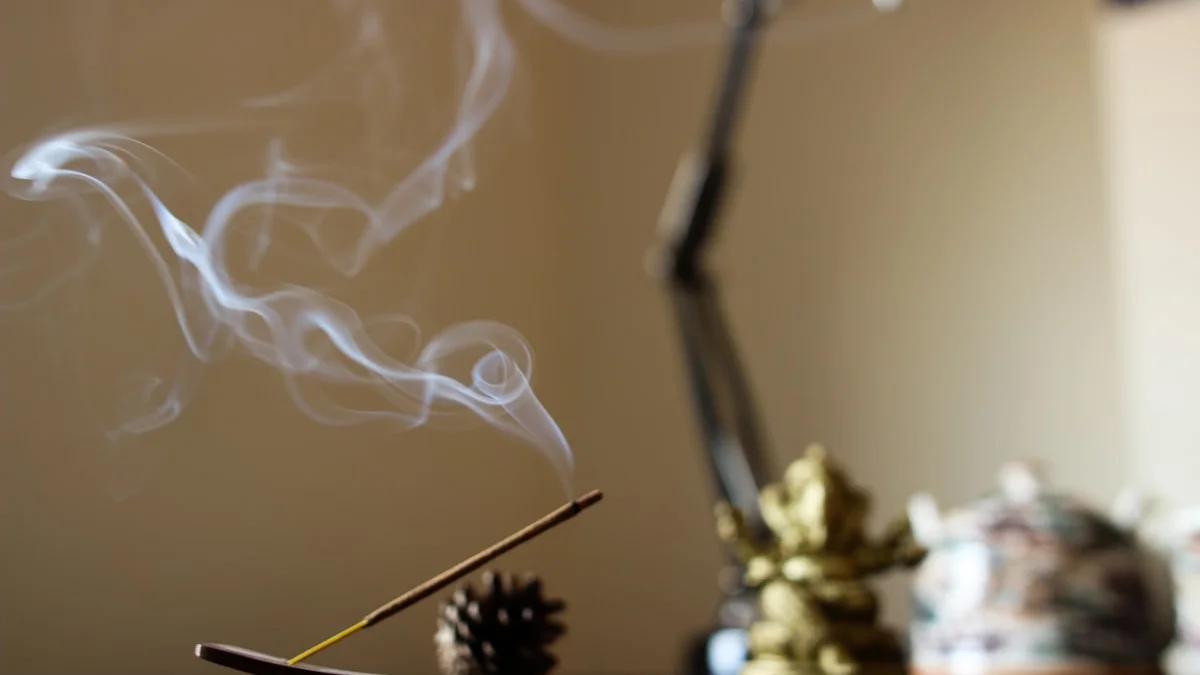
It is early, and the house is not yours yet. The kettle has not spoken. The phone has not been consulted. In forty minutes the day will arrive with its demands already drafted, but for now there is a chair, a closed door, and a cheap notebook. This is the whole inventory of the daily ritual, the 35-minute protocol at the center of The Obsidian Key, and this guide explains how the system works before you try to run it.
You do not need more willpower. You need a sequence that happens at the same address every day, because the Field compounds what repeats at the same address. The protocol is not a prayer and it is not a mood. It is maintenance performed the way an instrument is tuned before the music, twice a day, by a person who has decided to become the operator of their own broadcast, and what thirty-five minutes twice a day buys tallies the price.
Key takeaways
- The daily ritual is 35 minutes total: a 25-minute morning sequence and a 10-minute evening sequence.
- Four morning steps run in fixed order: Nine Breaths, Still Seat, Assumption Seat, Compound Mark.
- The logbook is written by hand; four short lines a day are the ledger of the compound.
- A missed day is resumed, never restarted. The minimum form is ninety seconds.
- Seven named failures account for nearly every collapse, and each has a repair.
What the daily ritual actually is
The book names it plainly. The protocol is the Key of the title, and the title is not a metaphor:
Nine laws, assembled, become one act performed twice a day. Perform it, and the book is finished. Neglect it, and the book was never opened.
Three sentences of doctrine sit under the schedule. First, repetition is not for the Field, which heard you the first time; repetition is for the Receiver, your body and nervous system, which is trained by cycles. Second, a mediocre sequence performed daily defeats a brilliant sequence performed occasionally. Third, nothing in the protocol asks for anything. You are not begging the Field for a life. You are becoming the person whose life the Field has already agreed to match.
If you want the wide view of how the 35 minutes are assembled, start with how the 35-minute protocol actually works, and if you are weighing the book itself, what the book prescribes daily walks the prescription line by line, and an honest daily ritual review weighs the price against the return.
The morning sequence, step by step
Twenty-five minutes, four steps, in order, before any screen. The screen rule is not purity; the first input of the day sets the tuning of the Receiver, and you are about to do that tuning yourself.
Step one is the Nine Breaths, about three minutes. Slow breathing with a longer exhale, counted from nine down to one. Step two is the Still Seat, seven minutes of resting as the awareness beneath thought, labeling each passing thought as noise and returning. Step three is the Assumption Seat, ten minutes in which you speak one identity sentence and occupy the state it names. Step four is the Compound Mark, five minutes with the logbook, and the daily ritual template fits all six lines on one page.
The order is not a preference. Stillness clears the desk, assumption writes the first stroke, and the mark records it. If you rearrange the steps, you are running a different operation and calling it by the same name. Why the four steps stay in order unpacks the assembly logic, morning stillness before the day covers the descent itself, and the Assumption Seat belongs to the identity cluster, where that technique is taught in depth.
The evening sequence
Ten minutes at the day’s last workable hour, in the same chair. Three movements. The Evening Replay runs three or four key scenes of the day as they would have unfolded from the assumed identity, revising the flinches. The Sealing Statement closes the circuit in one spoken line, and then the statement is honored: no feeds, no news, no one else’s emergency wearing the mask of a lullaby. The Log takes two minutes and one honest line.
The evening exists because the final state of the day is the seed of the next. That is also why the sequence is split rather than merged, which the 25 and 10 minute split explains in full, and why the protocol runs twice a day rather than once. For the technique of revising scenes without turning it into regret, see the Evening Replay in the identity cluster.
The equipment: chair, door, notebook
Four objects and a fixed hour. A chair that is not the bed, because practice conducted in bed teaches the deep mind that practice is a variety of dreaming. A closed door, which is exclusion rather than silence; if the household cannot be excluded, headphones and a turned wall will do. A cheap notebook, deliberately cheap, because this is labor and not devotion. A timer laid face down and out of reach.
The notebook carries weight beyond bookkeeping. Handwriting is the Receiver’s signature; a log typed at speed is correspondence, while a log written by hand is testimony. The full case for the furniture is in chair, door, notebook, and the ritual logbook shows the four lines a day the ledger actually needs.
The fixed hour
Choose the hour once, on the evening before Day 1, and choose it as a decision rather than a negotiation. Seven days at six outweigh thirty days at sometime, because the Field compounds what repeats at the same address, and an address includes a clock. A schedule chosen daily is not a schedule. It is a daily debate, and you will lose the debates on the hard days.
The hour can move if your life moves, but it should move by decision, not by mood. The fixed hour explains the compounding logic, and moving the ritual hour for shift workers adapts it to nights, early shifts, and rotating rosters.
When you miss a day
Count on missing. Travel, illness, children, catastrophe, and ordinary weakness will take mornings from you, which is why the schedule has one absolute rule:
Resume, never restart. A man who misses Tuesday and resumes Wednesday is on his eighth day. A man who misses Tuesday and restarts is on his first day forever.
Shame is the restart mechanic. It converts one missed day into a verdict on your worth, a verdict demands a fresh start, and a fresh start loses the streak that was keeping the compound alive. On broken days the floor is small but real:
On broken days, the minimum viable practice: nine breaths and the log. Ninety seconds.
Sick, shell-shocked, standing in an airport at four in the morning, that much remains available. Resume, never restart covers the rule and the shame trap, the minimum viable practice defines the floor precisely, and the ritual on disrupted days handles travel, illness, and chaos.
The seven failures and the repair
Every failed practice in this system fails in one of seven named ways: wanting instead of assuming, the open circuit, practicing from the neck up, impatience with the curve, action from anxiety, hoarding the result, and breaking the flame at night. A failure that can be named is a failure that can be repaired, and two practitioners rarely run the same one. The book’s point is colder and kinder than self-criticism: the seven are the places the instrument conventionally jams, and a jammed instrument is an instrument that has been picked up.
Diagnose rather than blame. The seven ritual failures lists each symptom with its exact repair, and once the protocol is running, the ritual timeline of signs tells you what typically arrives on Day 3, Day 7, and Day 21, so that early quiet is read as schedule rather than as verdict.
Frequently asked questions
How long does the daily ritual take
Thirty-five minutes in total. The morning sequence is twenty-five minutes and the evening sequence is ten. On broken days, ninety seconds of minimum form keeps the chain alive in the only place it is actually kept, the record.
Can I practice in bed instead of a chair
The book is specific: a chair that is not the bed. The body must learn two postures and keep them separate, the seat and the sleep. A kitchen chair is fine. The same chair at the same hour becomes an address the Signal recognizes.
What if I fall asleep during the morning seat
Falling asleep means the Receiver is owed rest, so pay the debt at night and keep the morning seat for the work: sit earlier, or with your back against a wall, until the boundary between rest and practice holds.
Do I have to tell anyone about my results
No, and the book asks the opposite. The sealed tongue runs to Day 90: no results announced, no method discussed, no early verdicts served to anyone. A session discussed is a session dissipated.
Is the daily ritual the same as meditation
It contains stillness, but it is larger. Stillness tunes the instrument, assumption authors the broadcast, and the mark records it. The protocol is a maintenance sequence for the whole signal, not a relaxation exercise.
This guide is educational and spiritual in nature. It is not medical, legal, or financial advice. If a practice brings up distress, speak with a qualified professional.
The chair is still there
Nothing in this system requires belief. It requires a chair, a door, a notebook, and a fixed hour, kept twice a day by someone willing to be evidence in their own case. The protocol asks for less heroism than you fear and more honesty than you are used to, and it pays in a currency the logbook makes visible, while living with the protocol after day 90 shows the practice settled into life.
If you want the source of all of it in the author’s own hand, The Obsidian Key is the field manual this guide summarizes, and the cheap notebook is waiting at any stationery shop tonight.