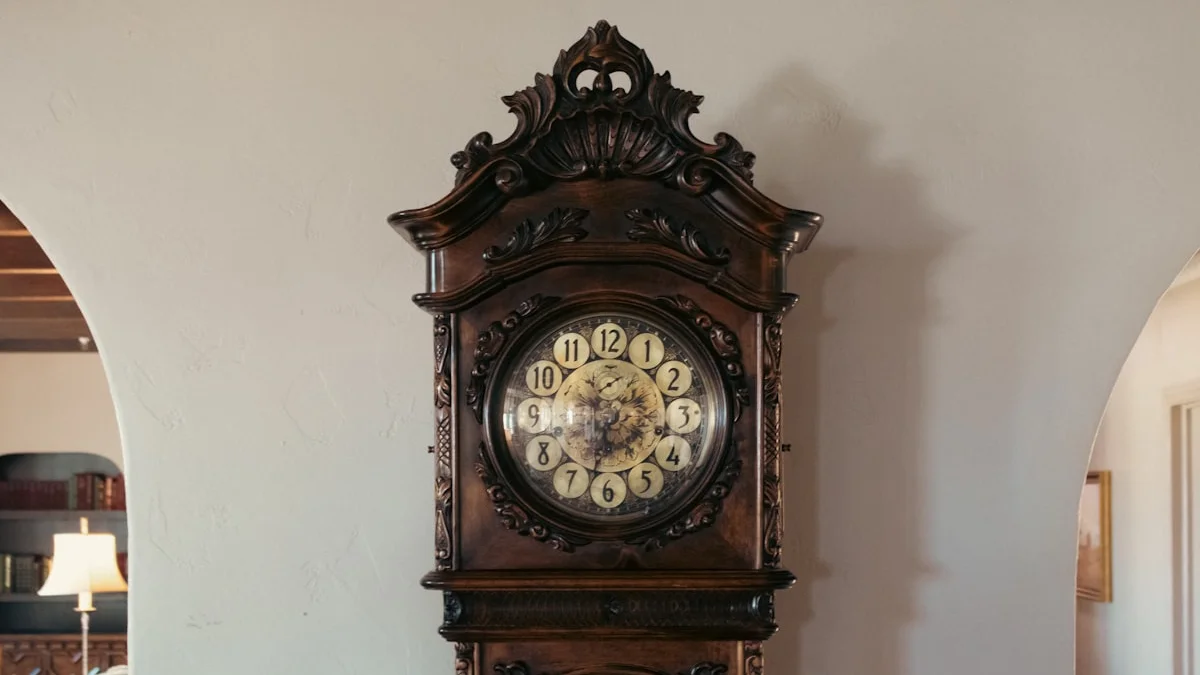
It is 5:50 in the morning and the house is not yours yet. The kettle is silent, the phone has not lied to anyone, and in forty minutes the day arrives with its demands already drafted. For now there is a chair, a closed door, and a cheap notebook. That scene, drawn from the manual behind this site, is not a picture of discipline. It is a picture of an address - and the reason it works is the reason fixed hour daily practice is taught at all: the Field compounds what repeats at one address, and it compounds almost nothing that scatters. This guide sets up the address, defends the hour, and repairs the weeks when the hour slips. The whole discipline of rooms, order, and tools is mapped in the environment and order guide.
Key takeaways
- The Field compounds what repeats at the same address; repetition at scattered addresses compounds little.
- Seven defended days at a fixed hour outweigh a month of practicing whenever the mood allows.
- The address has four parts: one chair, one closed door, one cheap notebook, one hour.
- The right hour is the one you can defend on your worst week, not your best one.
- A missed day is repaired by returning to the address, not by compensating with extra volume.
What Fixed Hour Daily Practice Actually Compounds
The doctrine gives the reason in one sentence: “The Field compounds what repeats at the same address.” The comparison that follows is the whole argument compressed: seven days of work done at 6:00 outweighs thirty days done at sometime. Not because the clock has magic, but because repetition needs a fixed coordinate to accumulate against. A deposit made to the same account daily grows a balance; the same deposits scattered across random accounts grow paperwork.
This is also the answer to the skeptic’s fair question: nothing here depends on the hour being enchanted. The hour is a handle the practice can grip. Doing the work at the same time in the same place teaches the deep mind the difference between practice and mere sitting, and the body begins to arrive on its own - which is the quiet payoff described below. The clock is not casting anything. The consistency is.
Building the Address: Four Parts
The manual’s setup is deliberately cheap. You probably own every part already, and the cheapness is the point: the record must be humble enough to stay honest.
- One chair, not the bed. A kitchen chair outperforms a throne. Use one chair, the same one, and let it become an address the Signal recognizes - practice conducted in bed teaches the deep mind that practice is a variety of dreaming, and the body obeys the lesson.
- One closed door. The book is precise about what the door does: “A closed door. Not silence; exclusion.” The door is the circuit’s first hinge, and if the household cannot be excluded, exclude the world with headphones and a turned wall instead.
- One cheap notebook. The logbook is deliberately cheap, because the work is labor, not devotion, and “the logbook is the ledger of your compound, and lies in it are deposits of nothing.” One page per day: the morning mark, the state sentence, the evening line, the truth about whether the work was kept.
- One hour. Finally, fix the hour - written down, defended like an appointment you keep with the part of yourself that signs the work.
The chair part alone carries more doctrine than it seems to, and it gets its own treatment in why the chair cannot be the bed; the door gets the same in why the practice wants a closed door.
Choosing an Hour You Can Defend
The right hour is not the holiest one. It is the one you can defend on your worst week, because the address only compounds if it survives contact with your actual calendar. A 5:00 start is worthless if Tuesdays kill it; a 9:15 window that holds every day, including the bad ones, is worth more than a beautiful dawn you keep missing.
Shift workers should anchor the practice to the body, not the clock face: the first quiet forty minutes after waking, whatever o’clock that turns out to be. The groove does not care about the number on the dial; it cares about sequence - wake, address, work. The book’s posture instruction assumes the same: use the same chair at the same time each day if you can, because “The Receiver learns a groove, and after some weeks the groove itself will begin to carry you down before you have done anything at all.” That sentence describes the whole reward of a fixed hour: the descent stops being something you do and becomes something that happens to you at the threshold. Morning light and the first hour of the day have their own guide in morning light and the first hour, and the hour sits inside a larger twice-daily structure described in the thirty-five minute daily protocol.
When the Hour Slips
Every defended address gets missed eventually, and the repair matters more than the miss. The rule: return to the address at the next occurrence, unchanged, and write one honest line in the logbook about the miss. Do not compensate with a double session, do not move the hour to chase the guilt, and do not negotiate a new address - the debt is paid by the return, not by the interest.
The unit of judgment also matters. The book sets it at the month: “A month is the smallest honest unit of change. Anything shorter is a mood.” One missed morning inside a kept month is noise; a month of drifting is data. Judge the address by the month, repair it by the morning. And when life scatters the address entirely - travel, a new apartment, a week of warehouses and checkout lines - the practice travels with the sequence, because the work was never a property of the house. It works in apartments and warehouses and checkout lines, wherever the chair, the door, and the notebook are arranged again. The printable logbook pages and the full weekly layout are in the toolkit.
Frequently asked questions
Does the hour have to be early morning
No. Early mornings are traditional because they are undefended - no one else wants them - but the doctrine’s requirement is sameness, not dawn. A fixed late-evening hour that survives your calendar beats a mythical 5:00 that survives nothing. Choose the hour you can protect on the worst week of a normal month.
What if my work shifts rotate every week
Anchor to the body instead of the dial: the same chair, the same sequence, the first quiet block after waking, wherever it lands. The groove forms around repetition of place and order rather than around a specific number. If your rotation is predictable, you can also fix one hour per shift pattern - the address changes on a schedule you decided, which keeps it an address.
How long before the groove starts carrying me
The book’s own estimate is weeks: after some weeks of same chair, same hour, the groove begins to carry you down before you have done anything at all. Some people feel it sooner, and the honest way to know is the logbook - look back after a month and see whether the threshold got shorter. Judge by the month; a single week is a mood.
Is this superstition about the clock
No, and the doctrine is explicit that objects hold no power - the salt, the smoke, and the clock are drawing aids for attention, while the practitioner holds the focus. The fixed hour is not an enchanted time. It is a fixed coordinate that lets repetition accumulate, the way a standing appointment lets anything compound. The magic, such as it is, is the consistency you bring to the address.
This guide is educational and spiritual in nature. It is not medical, legal, or financial advice. If a practice brings up distress, speak with a qualified professional.
An address, a chair, a door, an hour, and a cheap notebook: the whole entrance is this small. The full setup, the twice-daily protocol it anchors, and the thirty days it builds toward are in The Obsidian Key.