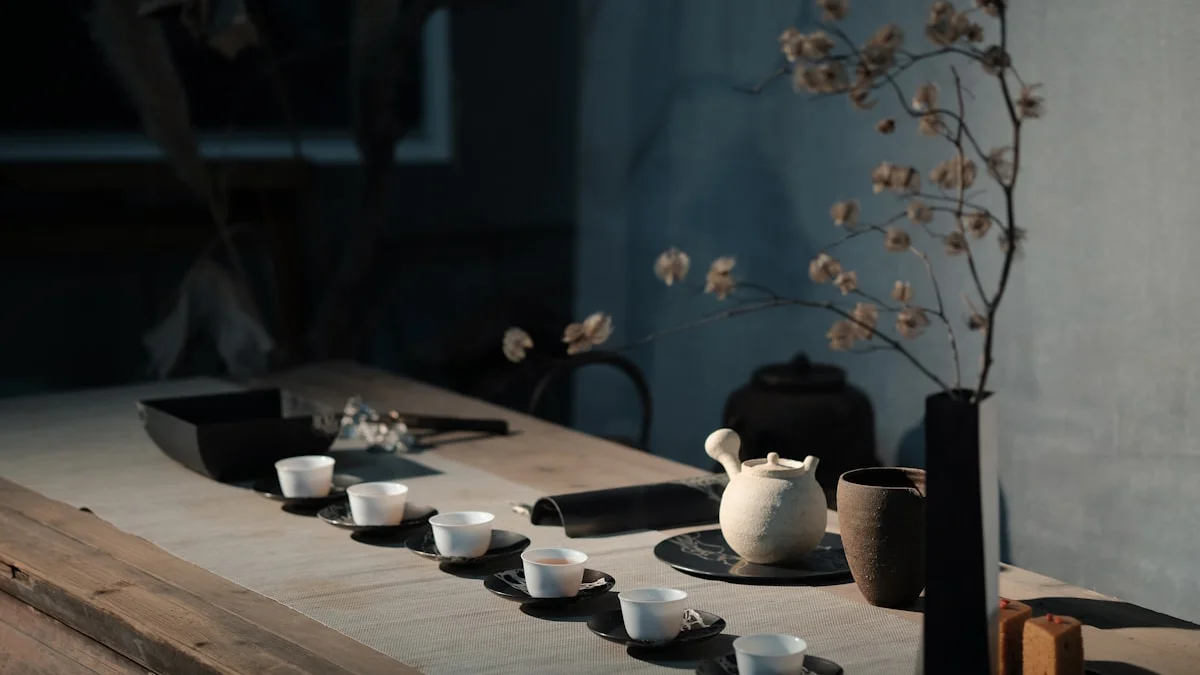
Somewhere in your house the practice is working. One chair, one closed door, one cheap notebook - the room where you sit at the fixed hour has learned your arrival, and the Signal meets you there on time. Then you stand up and walk back into the rest of the house, and the rest of the house has not been told. The hallway hums with the day you carried through it. The kitchen replays a conversation from last winter. The bedroom keeps its audience awake. A whole house environment audit is the slower, wider companion to the weekly room check: one deliberate walk through every room you live in, naming what each one costs. The environment and order doctrine treats space as part of the practice rather than a backdrop to it; this page turns that doctrine into a single evening of work.
Key takeaways
- A practice room can be immaculate while the rest of the house bills you; spaces accrue Signal residue regardless of where you sit.
- The whole house environment audit is a companion audit: one written walk through every room, threshold to threshold.
- Each finding gets one of three sentences - time-box, mute, or exit - the same disposal the weekly list uses.
- Order what the walk finds, cleanse where attention has decided, and open a window so every room has an exit.
- Rerun the walk monthly; lists that shrink over months are the quiet report that the work is holding.
The Whole House Environment Audit
The book’s weekly inventory is small on purpose, and the container it gives the audit is the first thing worth borrowing.
“Weekly, written, and time-boxed to twenty minutes or it becomes the very leakage it hunts.”
Same chair, ledger or loose paper, three lists. That weekly pass hunts leakage across your whole life - rooms, feeds, people. The whole house protocol is its companion: the same discipline pointed at one list, walked physically, doorway to doorway, less often. Where the weekly audit finds the rooms that bill you, the companion walk decides what happens in every room, billing or not. Give it one unhurried evening, a pencil, and permission to be unspectacular. The audit pages from the weekly pass are your starting inventory; the walk fills in what the pages cannot know from a chair.
Why One Clean Room Is Not a Clean House
The model underneath the walk is a single sentence.
“The Receiver is a tuning instrument, and it tunes to rooms.”
You are not a self that happens to stand in spaces. You are an instrument that resonates with them, and the resonance does not stop at the door of your practice room. The book’s warning is exact.
“Spaces accrue Signal residue, and a man can be immaculate in himself while living inside an antenna pointed at everything he is trying not to receive.”
Immaculate in himself, and still inside the antenna. That is the premise of the companion audit: personal discipline and spatial discipline are different ledgers, and a house is one instrument with many chambers. You tune one chamber at the fixed hour; the walk tunes the others.
The Walk, Room by Room
The protocol has four movements. You can run them in a single evening or split them across two, as long as they stay written.
List the rooms, then walk them
Write the inventory first: every room, hallway, landing, and threshold, from the front door to the back wall. Then walk it with the book’s own question.
“Which places reliably bill you - the meeting you leave wrung out, the dinner that re-runs itself, the car pool, the corner of the house where you always end up scrolling?”
Some of those live outside the house, and the walk will surface them anyway, because the house holds their paperwork. Name each finding plainly, which means write it down at the threshold where you found it, not later from memory near the sink.
Write what each room costs
A cost is not a judgment; it is a measurement. The book’s two house examples are the ones almost every home returns.
“A kitchen where an argument was fought holds the argument. A bedroom holding a phone holds ten thousand strangers.”
The kitchen’s cost is the flinch your body performs near the counter where the sentence was said. The bedroom’s cost is an audience kept six feet from a sleeping head. Neither cost appears in the room’s appearance; both appear on the walk, the moment you stand in the room and let it answer.
Order what the walk found
Half of what the walk finds is not residue but disorder: the coat that lives on a chair, the desk buried under finished and unfinished paper, the charging cable that turned a corner into a second office. Disorder is an antenna the Field can read, and clearing it is a finding you can act on the same night. The deeper grammar of that act - why arrangement is legible to the Field at all - is the subject of order the Field can read. Moving the phone out of the bedroom is an ordering decision before it is anything else.
Cleanse where attention has decided, and open a window
Some findings want more than order, and the book’s cadence tells you when.
“Cleanse after conflict in the home, after a heavy visit, after a season of drain - and monthly regardless, as maintenance.”
The tools are drawing aids for that decision, not the decision itself; a bell through the corners, incense carried slowly from angle to angle, attention moved deliberately through the room. What reclaims the space is the attention, and every cleansing ends the same way: open a window, because the room must have an exit, and so must you. The standing schedule for that maintenance - what belongs to the monthly pass and what belongs to a triggered one - is written up in the standing monthly cleanse.
When the Expensive Room Is a Person
Walk long enough and you will find a room that bills only when a particular person is in it. The audit has a list for this, and its tone is exact.
“Most parasites are not villains. They are feeding patterns with faces, and naming them is not cruelty; it is measurement.”
Naming is the walk’s work; disposition is the weekly list’s. The unavoidable get a bounded slot, wholehearted and exited cleanly, because bounded presence is presence; unbounded presence is hosting. The feeds that followed you home get silence without announcement, because muting is a spiritual act. The full disposal - time-box, mute, exit - belongs to the weekly sheet, and the human side of it is the subject of when the expensive room is a person.
Rerunning the Protocol
The companion audit is not a one-time renovation and not a weekly chore. It sits between the two, a full walk once a month, timed with the maintenance cleanse, with the weekly pass catching leakage in between. Keep the pages from each walk in the same place as the rest of the ledger.
“Keep the audit pages. Reread them monthly.”
Rereading is where the protocol pays. Rooms that billed in January stop billing by spring, not because the walk scolded them but because the walk re-authored them: the antenna moved, the threshold given its meaning, the window opened on schedule. The shrinking of the lists is the quietest proof the work is real, and it only shows up on pages you kept.
Frequently asked questions
How is this different from the weekly room audit
The weekly audit is a twenty-minute inventory of your whole life across three lists - rooms, feeds, people - and it hunts leakage. The whole house protocol takes one of those lists and walks it physically, room by room, less often. The weekly pass finds the rooms that bill you; the companion walk decides what every room is for, including the quiet ones that bill nothing yet.
Do I need to cleanse every room the walk flags
No. Cleansing answers residue, ordering answers disorder, and a bounded slot answers rooms you enter by obligation. Some findings cost nothing the moment they are named, because the naming was most of the work. Presence reclaims a room; salt, sound, and smoke only hold the attention that does the reclaiming.
What order should the rooms be walked in
Front door inward, ending where you sleep. Thresholds are decisions in this doctrine, so cross each one deliberately rather than drifting from room to room. The room where you practice sits at the end of the walk; it audits itself by use every day, and the walk is a chance to notice what has drifted around it.
How long does a whole house audit take
One unhurried evening for a typical home, longer for a large one, and it can be split by floor if the evening refuses to cooperate. What cannot be skipped is the container: written, bounded, and finished, the way the weekly audit is run. An audit that drifts into an open-ended night of rearranging becomes the leakage it was meant to find.
This guide is educational and spiritual in nature. It is not medical, legal, or financial advice. If a practice brings up distress, speak with a qualified professional.
The house that holds the work
A house that holds the work is not spotless; it is decided. Every room has been named, every antenna moved, every threshold given its meaning, and every cleansing has ended with a window. You can run the first full walk this week with a pencil and the inventory you already keep; the working pages live in the toolkit. The doctrine of rooms, and the Shield Operation this companion audit borrows from, is taught in the author’s own hand in The Obsidian Key.