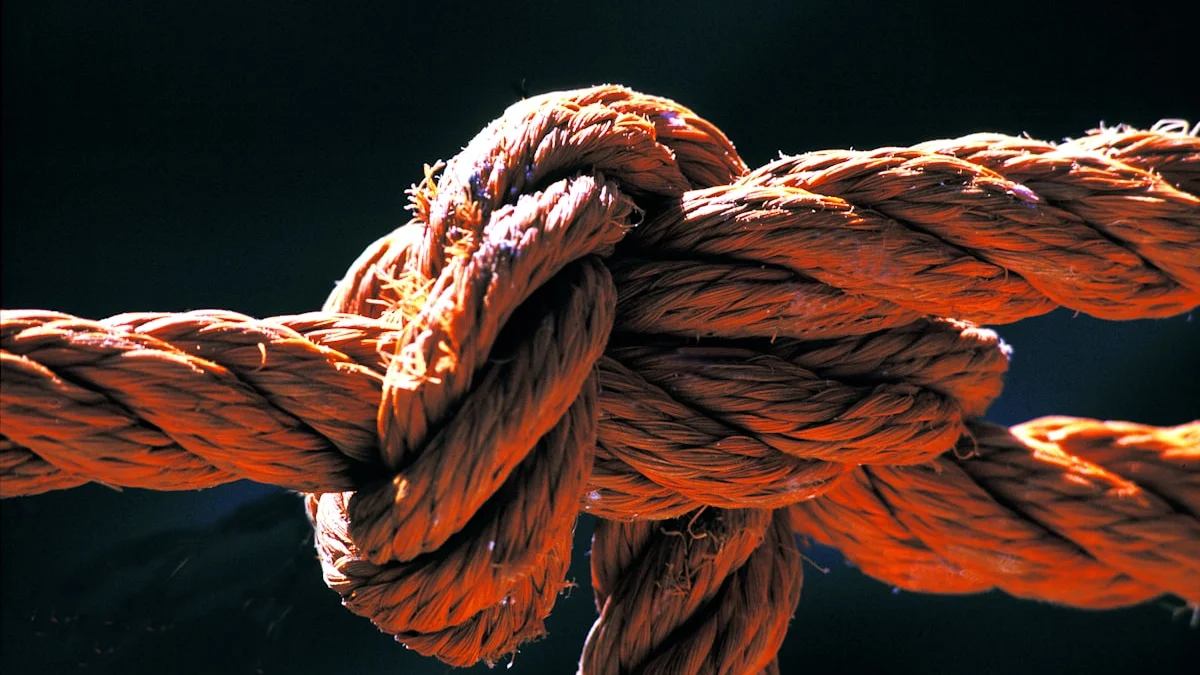
It is 6:47 in the morning and the day has already been narrated for you. A balance on a screen, a headline you did not choose, the same brake lights as yesterday, and by the time you sit down a mood has settled over everything like weather that belongs to the sky rather than to you. Most people live inside that narration for decades and never ask who wrote it.
The threads of the veil are how the doctrine behind the reality architecture guide names the fabric of ordinary perception. Its harder question is this: what if the day is not happening to you at all. What if the mood came first and the day simply matched it. This page takes that one piece of the model - the Veil - and shows the three threads that hold it together. You do not need to believe anything to use this. You only need to look at your own day closely enough to find the weave.
Key takeaways
- The Veil is woven from three threads: attention routed outward, identity assigned rather than authored, and emotion blamed on events.
- It is not a curtain in the sky. It is the texture of your attention, present in every ordinary hour.
- Each thread can be located in a single day once you know what to look for.
- Pulling one thread - reclaiming attention, authoring identity, or owning emotional weather - shifts the whole fabric.
- Small, unglamorous practices, repeated without force, are how a thread actually gets pulled.
The Three Threads of the Veil
Begin with what the Veil is not. It is not a curtain hanging somewhere above the world, and it is not a committee you can confront. The book describes it as a training: an instruction so total and so ambient that it feels like plain sight. What it hides, it hides in one small sentence:
“The lie is that the surface is all there is.”
You have lived behind that sentence since before memory. Everyone has. The correction is not to strain toward a hidden world. The correction is to study the fabric itself, thread by thread:
“A veil this old is woven from three threads, and you should learn to identify each in your own day, because the Veil is not somewhere else. It is the texture of your attention.”
Three threads. Attention, identity, emotion. Everything that follows is a way of seeing them in the one place they actually live, which is your day.
Thread One: Attention Routed Outward
The first thread is attention, aimed permanently away from its source. From the moment you wake, your noticing is harvested and aimed: at screens, at emergencies, at other people’s lives. An entire day can pass in which your attention never once turns around to ask what it is producing.
The diagnosis fits in one line:
“An attention that points outward all day is an attention that never once checks what it is broadcasting.”
This is not a complaint about phones. The feed is only the most convenient harvester; conversation, traffic, worry, the news - any of it can carry your noticing outward for sixteen waking hours without a single moment of ownership. The training holds because the outward aim feels like responsibility, paid to everything except the broadcast itself.
The pull here is small and mechanical: you can catch the aim in the act. Three times a day, when an interpretation arrives disguised as an event - a headline, a comment, a notification - simply mark it. No fix, no fight. The marking interrupts the harvest for a second, and the second is enough to see that the aim was aimed.
Thread Two: Identity Assigned Rather Than Authored
The second thread is the self you wake up inside. Almost everything you call yourself is a set of conclusions handed to you by an eleven-year-old’s evidence: what your family was, what money did or did not do, what you were told you were. Those conclusions were filed before you had any say, and they have been running ever since as if they were your own handwriting.
“You have been running an identity you did not write, and the world has been faithfully matching it.”
Read that twice, because it reverses the usual complaint. You have been waiting for the world to change so that you could change. The mechanism runs the other way: the world has been a faithful mirror of an identity that was installed, not chosen.
The pull here is a question, not an affirmation. At night, write one fixed fact of your life at the top of a page. Under it, two lines: “This is output.” and “What was the input.” You are not required to answer. Living with an unanswered input question already loosens the thread, because the assigned identity survives on the assumption that outputs are final.
Thread Three: Emotion Blamed on Events
The third thread is the most familiar: the belief that feelings are caused by what happens. The meeting went badly, so the dread is reasonable. The bill arrived, so the tightness is earned. Causality runs downhill from event to feeling, and no one thinks to check the plumbing.
The doctrine inverts the pipe:
“The event is the rain. The feeling-weather came first.”
What happens is, far more than you believe, caused by the sustained emotional weather you carry. The event that ruined your morning was a storm arriving after accumulation you never saw. Two people can walk through the same Tuesday and come out with different lives because they were carrying different weather into the same rain.
The pull here is measurement, not denial. When something small goes wrong, notice the distance between the event and the disturbance. A flinch measured in milliseconds says the weather was already loaded. That reading is not an indictment. It is an instrument coming into calibration.
How to Pull a Thread
The promise at the center of all this is almost disappointing in its scale:
“Pull one thread and the whole veil shifts. All three are pullable.”
One thread. Not three at once, not a reconstruction of your personality over a weekend. The training is total, so the countertraining is narrow. Choose the thread that is loudest in your life right now.
If your days dissolve into input, pull attention: sit with your feet flat and your eyes closed, exhale long twice, and do nothing for ninety seconds, twice a day. No wanting, no visualizing, no reciting. You are only watching the weather of the mind from below, and the watching is the pull.
If your self feels like a costume you were handed, pull identity: keep the two-column page for a week and let the question of input stay open. If your moods seem to arrive from outside, pull emotion: rate the noise of an ordinary hour from one to ten each evening, one line in a notebook, and watch the readings begin to move.
None of these are rituals of force. The Field does not respond to strain; it responds to signal, and signal is changed by small, boring, repeated acts of authorship. The full set of these instruments, on single printable cards, sits in the toolkit.
What Shifts When You Pull
The change is rarely cinematic. The veil does not tear; it thins. You may notice a pause before you answer. You may notice a morning arriving unnarrated, one hour without a verdict attached. Those small readings matter more than any dramatic break, because they are the fabric itself loosening.
Where this fits in the wider model is worth seeing. The Veil is the training; the Architecture beneath it is the machinery that has been responding all along. The mechanics of that response, and why reality answers signal rather than argument, are taken up in how reality answers the mechanics of the match. The deeper history of the explanations you inherited is traced in who installed your map of reality. The discipline of treating a hard day as a reading rather than a sentence is developed in circumstances as weather, not verdicts. And for the base claim underneath all of it - that the visible world is output, not input - begin with circumstances as readouts, not inputs.
Frequently asked questions
Are the three threads of the veil a metaphor or a mechanism
Both, and the distinction matters less than the test. The threads describe an observable texture of attention, identity, and emotion in your own day. Whether you call the weave metaphor or mechanism, the practice is identical: find the thread, stop feeding it, and watch what shifts.
How long does it take to pull a thread
Longer than a weekend and shorter than a lifetime. The training took years of ambient instruction, so the countertraining is measured in weeks of small, repeated acts. Readers who keep one narrow practice daily usually notice the pause widening within two or three weeks.
Can I pull more than one thread at a time
You can, though it is rarely wise. Each thread pulled is a change to the broadcast, and three simultaneous changes are difficult to read. Choose the loudest thread, work it until the readings move, and only then consider the next. Narrow beats total.
What if the veil comes back after I pull a thread
It does, and that is expected. The Veil is a training, and old trainings reassert themselves under stress. The pull is not one heroic act; it is a habit of noticing. When the weave tightens again, you tighten the practice rather than yourself.
Does pulling threads mean ignoring real problems
No. Paying the bill, having the conversation, and doing the work all still happen. What changes is the order of causality you assume while doing them. The world is still handled; it is simply no longer treated as the author of the weather you carry through it.
This guide is educational and spiritual in nature. It is not medical, legal, or financial advice. If a practice brings up distress, speak with a qualified professional.
The weave held for decades because no one showed you the threads, and the pattern kept repeating because you were never told the loom was yours. One thread, pulled today, is enough to feel the fabric give. The book that walks the whole architecture, layer by layer, is The Obsidian Key.