There is a scene in the book that anyone who has ever woken at two in the morning will recognize. Nothing is wrong. The body is heavy, the room is dark, and yet the mind has opened its doors early: tomorrow’s meeting marked down, a conversation from years ago marked down, everything must go. You did not choose to open the store, and you cannot close it by arguing with the auctioneer - which is exactly the situation this glossary entry exists for. The Silent Center meaning, settled in the book’s own terms, is the name it gives to the one point in you the auction has never reached: the still point of awareness beneath thought, where the signal is actually authored. This page defines the term, locates it in the architecture, and shows how the practice reaches it. The full set of terms is laid out in the doctrine glossary guide.
Key takeaways
- The Silent Center is the still point of awareness beneath thought, where the Signal is authored.
- It is the fourth part of the Architecture, and the one the whole book turns on.
- It is not a metaphor for peace, not a mood, and not the same thing as silence.
- The noise in your head is explicitly not you; the Center is what watches it cross.
- Entry is through stillness practice, not through winning an argument with thought.
The Silent Center meaning, in the book’s terms
The book’s own glossary keeps the definition almost cruelly short.
“the still point of awareness beneath thought, where the Signal is actually authored.”
Every word in that line is load-bearing. Still point - a location, not an emotion. Of awareness - not of the body, which is the Receiver, and not of the mind, which is the noise. Beneath thought - below the stream, not on its banks. And the last clause is the one that gives the term its authority in the doctrine: the Signal is actually authored there. Everything you broadcast, according to the Architecture, originates at that depth, which makes the Center not one interesting idea among many but the control room of the whole model. The chapter that introduces the four parts sets the same term in place like a keystone:
“Beneath thought, beneath mood, beneath the Receiver’s hum, there is a still point of pure awareness.”
The definition was placed in Part I, in the chapter on the Architecture, and the book flags it there as the part the entire system turns on. That is unusual grading for a glossary term, and it is the first sign that the Silent Center is structural rather than decorative.
Where the term sits in the Architecture
The Architecture, as the book defines it, has four parts: the Field, the Signal, the Receiver, and the Silent Center. The first three form the broadcast chain - the Field is the responsive medium, the Signal is your transmission, the Receiver is the body and nervous system that generates and tunes it. The fourth part is not in the chain at all. It sits beneath it, which is why the book saves the phrase for it that it uses for nothing else: what the model’s first law is built to reach.
“The awareness under both: still water under weather. This is the Silent Center.”
Still water under weather is the image to keep. The body moves constantly and the mind never stops moving - weather, weather, weather - and under both runs something that has never once participated in the storm. The term’s position in the model explains a practical consequence that beginners miss: you cannot tune the Signal directly, any more than you can tune a radio by shouting at it. You reach the Center, and the tuning follows from what is authored there. How the Center relates to the layer it sits inside is traced in what the Architecture means, and its opposite - the visible world treated as all there is - is defined in the meaning of the Veil.
What the Silent Center is not
The book defends its term against three cheap substitutions, and the defenses matter as much as the definition.
First, it is not a metaphor for peace. The text says so directly, and adds that it is not a mood you occasionally visit. A calm evening is not the Silent Center; neither is the absence of stress. The Center is a location in the architecture, and locations do not depend on atmosphere.
Second, it is not the thoughts’ master and not their prisoner. The book’s central finding on the noise is worth writing on the wall:
“the noise is not you.”
Three words, and they carry the whole first law’s aim. You have listened to the noise so long and flinched at it so reliably that you concluded the flinch is your self. The Center is the correction to that conclusion: the one who watches thought cross is older than any of it, and has never been damaged by a single passing storm. Thought, in the book’s image, is weather; it crosses.
Third, it is not silence. This confusion costs more practice-hours than any other, so it gets its own section.
Silence versus stillness
The distinction is drawn with unusual care, because every sleepless night has already proven it to you.
“Silence is external: the room goes quiet, and the noise continues anyway, as every sleepless night has proven.”
Stillness is internal, and the book defines it by relocation rather than by absence: the noise may continue, and you are no longer located in it. That is why a quiet room is not the goal and why sound-cancelling headphones have never once authored a signal. The practice aims at the depth where the transmission originates, and that depth can be reached in a house full of children, a hospital corridor, or a workplace at noon - the noise is permitted to continue, because the Center was never disturbed by it in the first place. The skill itself, as something trainable and distinct from relaxation, is examined in stillness as a skill below thought.
How you reach it
Entry is through stillness, and the doctrine is blunt that this is why stillness is the master key. The forms are small and daily. The Nine Breaths carry the nervous system down a floor - a long exhale is the handle by which it is carried - and the Still Seat holds the position: a chair, a timer, and eleven minutes of declining to follow thought rather than fighting it. Neither form empties the mind; both relocate the sitter.
The Folios compress the whole geography into a fragment that reads like an epitaph for an unvisited room.
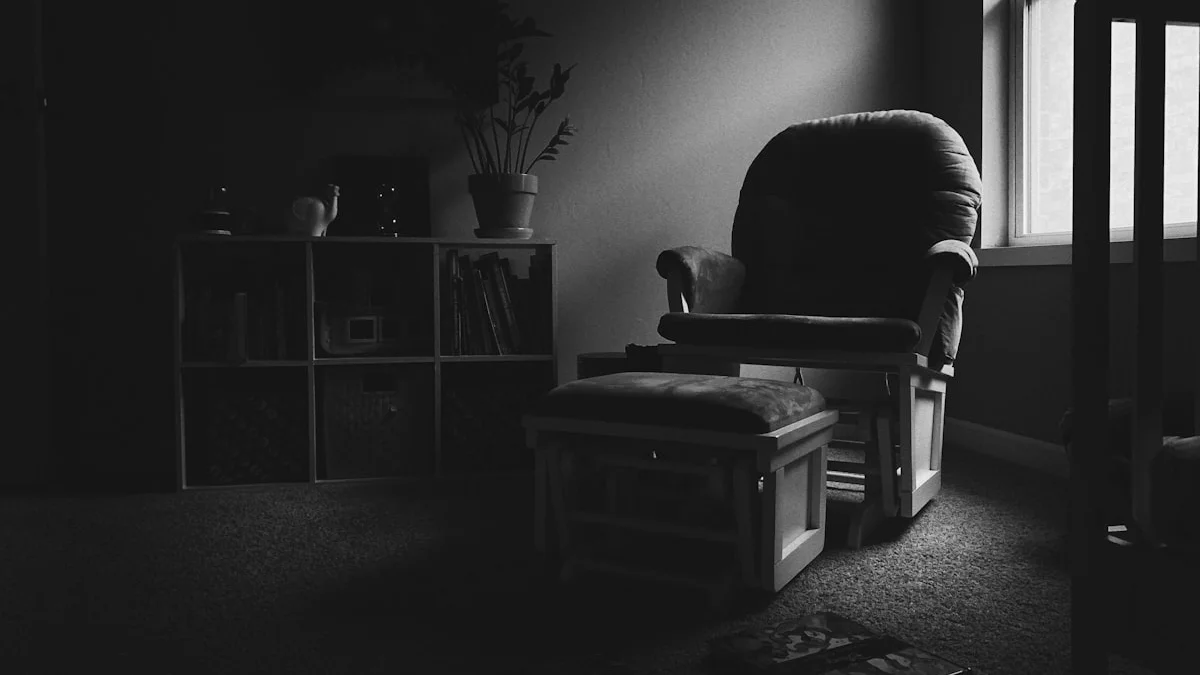
“Beneath every loud life there is a quiet room. The room has one chair, and no one has been sitting in it.”
The image carries the doctrine’s particular melancholy: the room is not locked, and the chair is not occupied by anyone else. The seat practice that puts you in it is defined in the Still Seat meaning, and the three minutes of breath that open it are in the Nine Breaths meaning. What happens at that depth - the authoring of identity rather than the requesting of outcomes - belongs to the Second Law, and it is the reason the first law is called the first: nothing downstream of the Signal can be set from anywhere above it.
Frequently asked questions
Is the Silent Center the same as the soul
The book does not use that word for it, and the difference is practical rather than theological. A soul is usually described as something you have; the Silent Center is described as a location you can occupy, at will, through a repeatable practice. The doctrine keeps the term operational so that it can be worked rather than believed in.
Do I have to stop my thoughts to reach it
No, and trying is the standard beginner’s error. The instruction is to decline to follow thought, not to abolish it - the noise is permitted to continue while your location changes. Practitioners report that thought keeps crossing the whole time; what changes is who is watching the crossing, and from how far beneath it.
How is the Silent Center different from the Receiver
They are easy to confuse because both are “yours,” but they sit at different levels. The Receiver is the body and nervous system - the instrument that generates and tunes the Signal, and the thing that gets dysregulated by feeds, conflict, and poor sleep. The Silent Center is beneath the Receiver’s hum: the awareness that authors the transmission the instrument carries. One is hardware, in the model’s terms; the other is the control room.
Where does the term first appear in the book
The Silent Center is introduced in Part I, in the chapter on the Architecture, as the fourth of the four parts, and the text marks it there as the part the whole book turns on. It returns as the name of the First Law, where the practice that reaches it is taught, and it reappears in the protocol and the glossary at the back.
What if I sit and feel nothing at all
Nothing is not failure; it is frequently the report of a first real descent. The Center is not a sensation to be produced, so the absence of fireworks is not evidence of absence. The honest metric is what happens afterward - how the day’s noise lands, how fast the static reclaims you - and the log line the practice asks for is where that evidence is kept.
This guide is educational and spiritual in nature. It is not medical, legal, or financial advice. If a practice brings up distress, speak with a qualified professional.
Beneath every loud life there is a quiet room, and the chair in it has been waiting without complaint. The book that teaches you to sit there is The Obsidian Key.