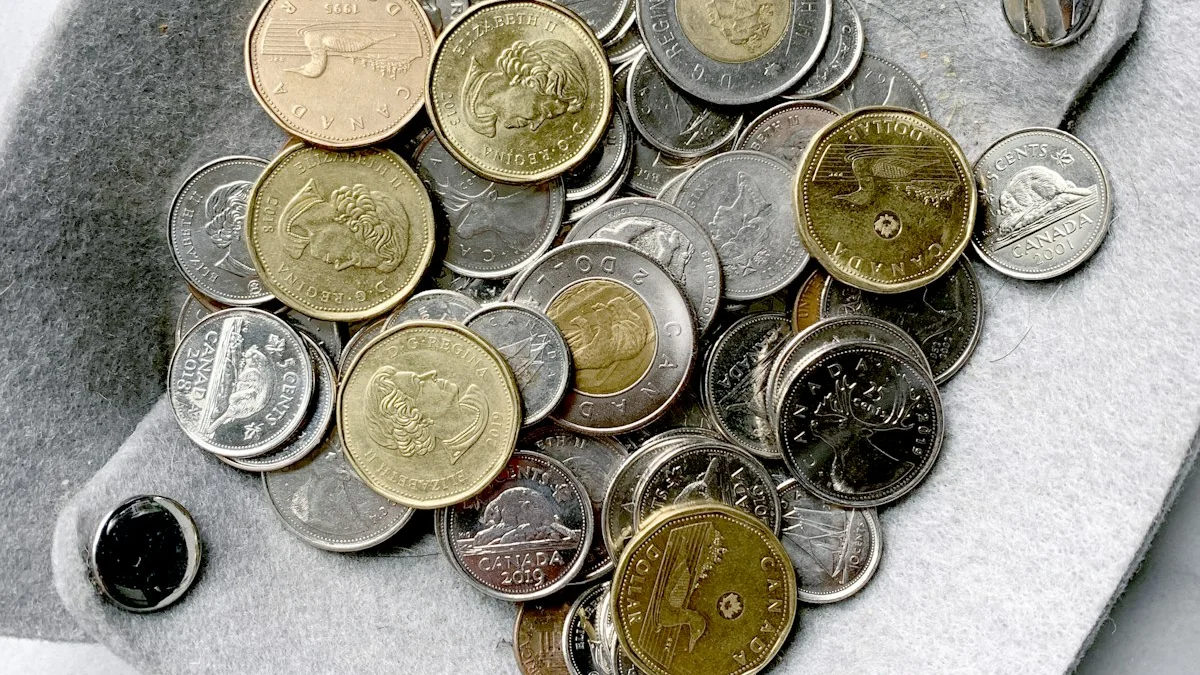
A tip leaves your hand and something in the chest tightens half a beat after the bills are gone, a small reluctance you would never name out loud. The doctrine names it anyway, and then it makes a claim about the bills themselves that most readers walk past twice before it lands: money is signal. Not a symbol of signal, not a reward for signal, but signal in solid form, moving through the world the way current moves through wire. This page takes that single sentence apart. The wider posture it belongs to is mapped in the money mindset pillar guide, and here the scope is narrow: what the sentence means, what follows from it, and one movement a day that lets you test it.
Key takeaways
- Money is defined as moving signal: congealed attention, a receipt for spent hours and a claim on future effort.
- Because it is signal, the state that directs it outranks the amount that arrives; the Field audits the grip, not the balance.
- Hoarding and saving are different acts: one closes the circuit by fear, the other opens and closes it by command.
- Conduct outranks wishing, which is why one deliberate movement a day teaches more than any affirmation.
What it means that money is signal
The chapter where the definition appears does not open with economics. It opens with architecture, and the sentence sits at the center of it:
“money is moving signal. It is congealed attention, frozen commitment”
The phrase deserves a slow reading, because each half carries weight. Congealed attention: every unit you hold was once hours of somebody’s morning, and it will become hours of somebody else’s, and between those two people it travels the way messages travel. Frozen commitment: a bill is a promise that has stopped moving, a tip is gratitude made portable, a wage is a week of a life given a number so it can be carried. Money behaves the way it behaves, the book argues, because it is made of the same substance as everything else the Field responds to. It is signal that has taken a body.
For the skeptic, this is the least mystical claim in the book, which is why it is worth starting here. You already treat money as information. A balance tells you what is possible. A price tells you what a stranger’s labor is believed to be worth. A payment says: this direction, continued. The doctrine only adds that the Field reads the same traffic, and reads the direction in it more carefully than the size of it.
The Sixth Law and the circuit
The definition is followed by a law, and the law is where most readers flinch, because it touches the hand before it touches the account:
“This is the Sixth Law: money is moving signal, and hoarding closes the circuit.”
Mark the distinction the chapter is careful to draw, because the tradition is routinely misread here. Saving, done as an act of command, is a declaration: this unit moves at my direction, on my schedule. That is a fist opening and closing by choice, and the book calls it the posture of wealth. Hoarding is a different act wearing the same clothes. Hoarding is holding by fear: I do not direct this, I merely refuse to release it, because release feels like death. The first is a hand. The second is a trap, and a trap catches only its owner.
This is also why the doctrine locates the problem below the budget. You can run a disciplined ledger and still hold the whole thing in a white knuckle, and at the level the Field reads, the knuckle is the data. Posture first, arithmetic second, and in that order, because the arithmetic executed from a closed hand simply reproduces the closure at larger figures.
Conduct outranks wishes
If money is signal, then the question becomes what your traffic actually says when nobody is editing it. The book’s answer is severe and quiet:
“The Field matches conduct before it matches wishes.”
Wishes are cheap, and the medium knows it, because wishes cost nothing to emit. Conduct is expensive, and that is exactly why it carries the Signal: the movement of a single unit in a chosen direction announces more than a decade of wanting it. This is the logic behind every small rite in the money chapters, from receiving a compliment without deflection to paying yourself before any creditor speaks. Each act is a sentence in the only language the Field reads fluently.
It is also the logic behind the first-thousand teaching, where the size of the sum is deliberately small, because a small sum is where the fear is fully present and can be overruled in full view. The seed and the threshold are treated in the first thousand as a wealth posture, and the standing posture itself, the hand that receives without flinching and directs without strangling, is the doctrine of the Opened Hand.
One deliberate movement a day
The practice attached to this page is small on purpose, and you can run it tonight. One unit of money, moved once a day, with full attention and a clear direction. The amount is irrelevant; the rank of the act is everything.
- Choose the movement in the morning, so it never happens by accident. A tip beyond habit. A debt settled a week early. A payment to yourself made before any bill, however small, on the logic that the first direction given is the one the Signal hears.
- Move it in one motion, without renegotiating mid-act and without narrating it to anyone. The act carries the sentence; the mouth is not needed.
- Log one line at night: the movement and the direction it declared. No totals, no forecasts, no judgment of the amount. The ledger is an evidence log for a posture, not a scoreboard.
Run it for a week and watch the flinch that rises when the hand opens. That flinch is the whole curriculum. Nothing about this practice guarantees that money arrives, and the Folios never promise amounts; what it trains is the direction-giving hand that the doctrine says everything else waits on. The emotional charge under the flinch, and why wanting money with dread pushes it around in circles, is read closely in the voltage of the emotional signal.
Frequently asked questions
Does money is signal mean rich people have better signals
No, and the misread matters. The doctrine treats posture and balance as related but distinct: a large balance can sit inside a closed circuit, and the holder experiences it as the low dread familiar to anyone who has money and no command over it. The claim runs the other direction. Fix the posture and the balance tends to follow, because conduct is what gets matched. The number is a symptom of the grip, never the cause of it.
Is this a promise that money will arrive if I practice
It is explicitly not that, and the book says so where the model is laid out. The Folios describe mechanics and never guarantee amounts, income, or events. What the practice changes first is the operator: the grammar of the sentences, the flinch in the receiving, the direction in the moving. Improved odds and earlier openings are what practitioners report. Treat even those as weather from other people’s skies, and keep your own log.
What is the difference between saving and hoarding in practice
Ask who is in command of the release. Saving moves on a schedule you set: the same sum, the same day, without drama, as an act of direction. Hoarding cannot schedule a release, because release feels like loss. Two people can hold identical balances, and one is a hand and the other is a trap. The account cannot tell you which you are. The body can, in the half-beat of tightening that follows any unit leaving.
Can I practice this while money is genuinely tight
The doctrine’s answer is that tightness is the best available gymnasium, precisely because the fear is fully present and every unit moved is moved against resistance. The amounts shrink; the grammar does not. One small deliberate movement, one received kindness taken in one motion, one sentence spoken in the directing form instead of the collapsing one. Scarcity of figures does not prevent practice of posture, and posture is the part the doctrine claims is being read.
The direction decides
The sentence on this page is short because the craft under it is narrow: money is signal, signal follows direction, and direction is visible to the medium in your conduct before it is visible anywhere else. One movement a day is enough to begin the argument. The book where this law sits inside a full architecture of posture, circuit, and hand is The Obsidian Key, and the next unit that leaves your hand is as good a first page as any.
This guide is educational and spiritual in nature. It is not medical, legal, or financial advice. If a practice brings up distress, speak with a qualified professional.