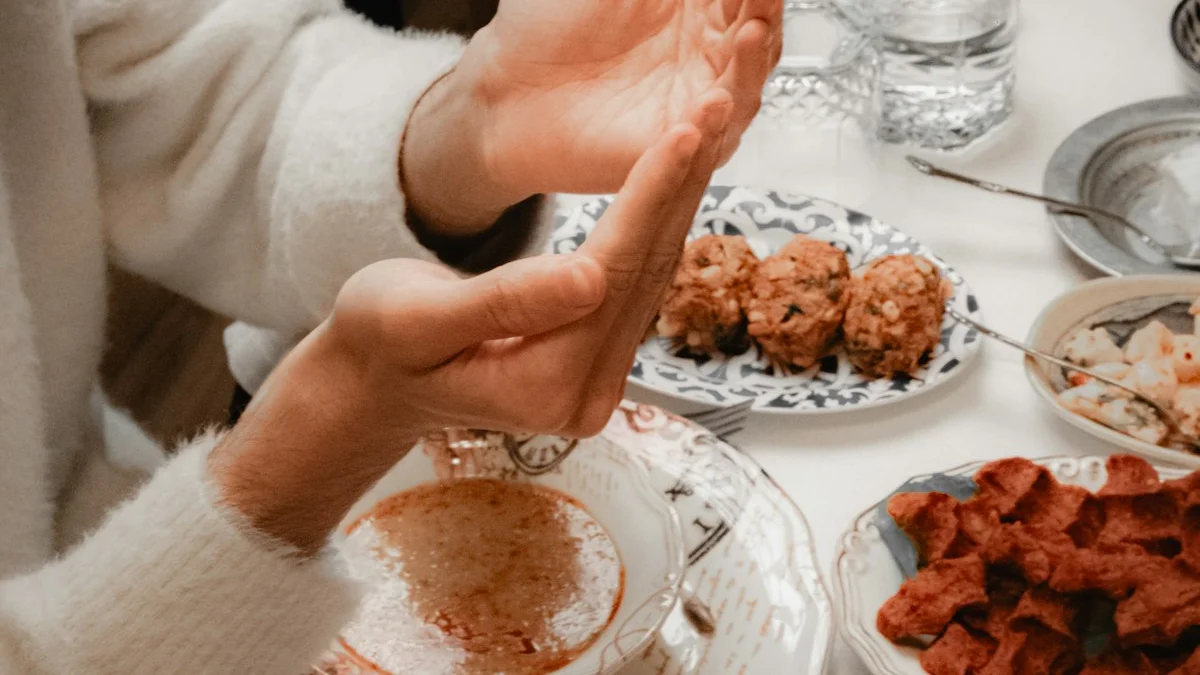
You have probably typed family loops dinner table into a search bar at some point, hunting for a word for a scene you can play from memory. Here is the scene as the book plays it: a long table, the fourth year running. Same plates, same seats. By the soup course, the argument. You could perform your side with the lights off, and so could everyone else, and no one finds it strange, because everyone is performing too. The doctrine has a name for the machinery under that evening - a Loop - and a stranger idea behind the name: the repetition is not a punishment, and it does not end the way fights end. This page is part of the people in your field guide, which reads relationships through the doctrine of the Signal and the Field.
Key takeaways
- A Loop is repetition with jurisdiction: an unfinished pattern that re-runs until it is completed with respect.
- “Karma is unfinished repetition.” - the old word, restored to its technical meaning.
- Your practice can hold everywhere except one table; scripts stored young outrank states adopted late.
- The remedy is three verbs in order - named, honored, severed - not a war with the table.
- Every family transmits something; the thriving ones are the ones someone ends a pattern in on purpose.
Family Loops Dinner Table: the Fourth Year
“It is the fourth year of the same dinner. The same plates, the same seats, and by the soup course the same argument, running on rails: the same accusation from his chair, the same defense from yours, the same silence for dessert.”
Read the scene again and notice what is missing: an instigator. No one chose the argument; the table did. The accusation lands in the same seat, the defense rises from the same seat, and dessert arrives with the same weather. On the drive home there is a sentence in your mouth you have said a hundred times - how does this keep happening - and the honest answer is that it keeps happening because, at that table, everyone is a performer and the script is older than anyone present. That is the sensation the phrase family loops dinner table points at: not a bad dinner, a rehearsed one.
Karma, Restored to Its Technical Meaning
The old word for the machinery is karma, and the book restores the word rather than retiring it:
“Karma is unfinished repetition.”
Nothing metaphysical is being claimed about your worthiness - no cosmic bookkeeping, no debits collected with interest. The claim is mechanical, and the mechanics are almost tender:
“A pattern that was never completed re-runs; that is its whole nature, the nature of anything unresolved.”
A bell that was rung and never allowed to finish ringing is still, in a real sense, ringing. Every repeated relationship, every recurring failure, every family sentence is a bell mid-toll, decades after the hand that struck it has gone. The comfort inside that severity is worth naming: a pattern that re-runs is a pattern that has not been answered yet, not a sentence you were born under. Unfinished means finishable.
Why the State Dissolves at That Table
Here is the part that costs practitioners years. You can hold your state all week and lose it between the soup and the dessert:
“You can occupy an Assumed State in every hour of the morning and still watch it dissolve at the family table”
The reason is jurisdiction. The Signal broadcasts from many floors, and a script stored in the body at the age of six outranks a state adopted at the age of forty whenever the two conflict in the same room. That is why the book reports the pattern practitioners know best:
“This is why so many sincere practitioners report that their practice holds everywhere except around certain people, certain dates, certain subjects.”
It is not weak discipline. It is territory, and territory is taken by ceremony, not by affirmation. This is why the next good morning does not fix the next dinner, no matter how clean the seat was. The full anatomy of the collapse - and how to work with a practice that fails only at home - is in why practice holds everywhere except home.
The Sentence That Is Not Yours
Loops leave signatures, and the loudest one arrives in your own voice:
“your mother’s exact phrasing leaving your mouth, or your father’s contempt, or the fatalism of a grandparent you barely knew, arriving in your voice with your vocabulary”
You hear it mid-sentence, usually. The sentence was always there, waiting for the cue; you did not decide to say it, you were cued. That is the sign that stops people years later, because it is one thing to inherit a table and another to find the table speaking through you. What the family sentence is, where it is stored, and how to hear it early is the subject of the family sentence in your own voice.
The Three Verbs, and What They Cost
The remedy is not a war, because you cannot defeat a script by denouncing it - denunciation is a review, and reviews sell tickets. The Folios give three verbs, applied in order:
“the Loop must be named, the Loop must be honored, and the Loop must be severed.”
Named: one plain line, without shame, for the pattern - the fourth-year dinner, the debt dance, the silence for dessert. Shame is the Loop’s favorite set decoration; naming without it is half the work. Honored: the pattern is acknowledged as what it once was - a protection, a belonging, a loyalty - before anything is dismissed. Severed: ended with respect, the way a devotion is retired rather than an enemy fought. The order matters, and the written rite behind the verbs is defined in what the Cutting means, with the terminology of the pattern itself in what a Loop means.
Note what this page does not ask of you: no distance from your family, no diagnosis of the man in his chair. The teachings for people are boundary and allocation, not amputation. The longer walk, from naming an inherited pattern to being the one who retires it on purpose, has its own page in becoming the generation that ends the pattern. What you end is the script, and you can end it while still passing the potatoes - because the families that do well are not the families with nothing to end:
“The ones that thrive are not the ones with no patterns. They are the ones with someone willing to be the generation that ended one on purpose.”
Frequently asked questions
Can a Loop end without anyone else changing?
Yes, and that is the quiet hope of the whole teaching. The script runs on participants, and you are one of them. When one performer stops supplying the written line - when the accusation lands on someone who does not answer from the scripted chair - the rails lose their train. It rarely looks dramatic. The dinner is merely shorter, or duller, or strange in a way no one can name.
Is this a reason to distance myself from family?
The teachings for people are boundary and allocation, not distance. Bounded presence - a fixed, wholehearted hour rather than the unclaimed margins of your week - is presence; unbounded presence is hosting. You can end a Loop and still attend the dinner. What you stop attending is the performance inside it.
What does honoring a Loop actually look like?
It looks like accuracy about what the pattern did for you. A fourth-year argument is usually a loyalty in costume - the way a family once stayed close, or stayed safe. Honoring is saying, internally and precisely, that you understand what it protected and when. Severance without that step tends to re-run as guilt; the honor is what lets the ending hold.
How do I know whether I am inside a Loop?
The tell is effortlessness in the wrong direction. A Loop costs nothing to run - the seats, the cues, the lines all arrive on time - while changing it takes deliberate ceremony. If a scene in your life performs itself and reliably casts you as the same character, you are not having a conflict. You are attending a rehearsal that never closes.
Taking the Seat at That Table
A Loop is not a curse, and the dinner is not a verdict. It is unfinished business wearing a yearly tradition, and the doctrine treats it with more respect than most of us treat our own families - named, honored, severed, and only then released. What waits on the other side has no script: a table where no one has rehearsed, and a drive home with a different silence in the car. The self-check in the free toolkit tells a live Loop from an ordinary bad evening. The people in your field guide maps the rest of the territory, from borrowed moods to bounded presence. And the book that names this machinery without turning it into a war is The Obsidian Key - the field manual for the architecture under the table.
This guide is educational and spiritual in nature. It is not medical, legal, or financial advice. If a practice brings up distress, speak with a qualified professional.