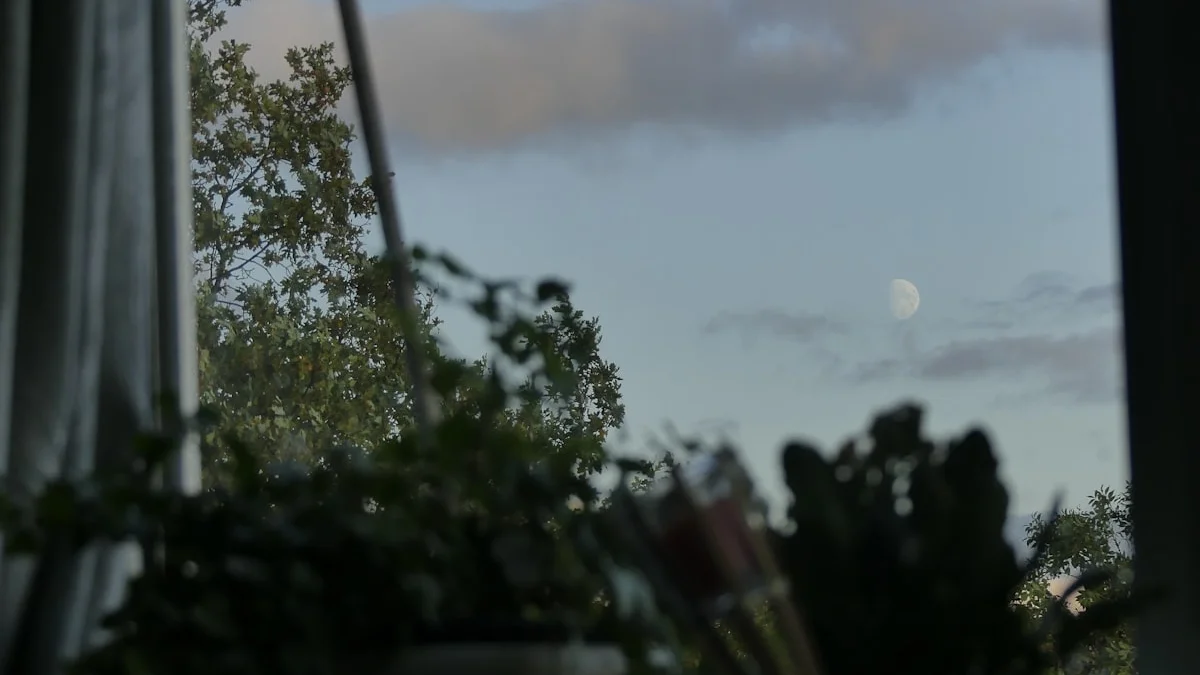
Nothing happened today. That is the strange part. You closed the laptop, the house went quiet, nobody called with bad news, and something in your chest kept working a problem it would not show you. A rehearsal runs behind your eyes for a conversation that may never occur, and you carry it into every room. That low running commentary is ambient worry, the leak with no event attached, and in the doctrine of attention discipline it is counted among the five leaks, the hardest one to see because there is nothing to point at.
A feed steals attention with a spectacle. A person takes it with a demand. Ambient worry takes it with nothing at all, a standby generator burning fuel you never agreed to spend. This page is the anatomy of that leak: what the hum does to the Receiver between sittings, how to tell a real worry from a bleed, and what changes when the hole finally closes.
Key takeaways
- Ambient worry drains attention continuously through a hole whose edges you cannot see.
- It keeps the Receiver dysregulated between sittings and undoes the morning tuning hour by hour.
- A parasite is anything that takes your attention and returns none of it, and the hum qualifies.
- Worry with a task gets a window; worry about another adult is a bleed; worry with no object is the leak itself.
- Close even one large hole and the level of the vessel stands still, then begins to rise.
Ambient worry, the leak with no event attached
The book’s Third Law names the leak with unusual mercy, because it describes the condition before it prescribes anything.
“Ambient worry. The background hum, the rehearsed disaster, the clipboard of unfinished threats the mind carries into every room.”
The rehearsed disaster is the argument you lost three years ago, re-litigated while you brush your teeth, with you this time saying the perfect sentence. The clipboard is the list of things that could go wrong, reviewed so often that none of them need to happen to cost you the afternoon. Then the definition, which is the reason this leak hides so well:
“This is the leak with no event attached: attention draining continuously through a hole whose edges you cannot see.”
Every other leak has a villain you can name. The feed has an app. Outrage has a headline. Ambient worry has only weather, a pressure that arrived from nowhere and owns the whole sky. You cannot delete it the way you delete an application, which is exactly why it deserves its own reading.
Why the hum keeps the Receiver dysregulated
The cost is not only the minutes. The book is specific about what the hum does to the instrument that broadcasts your Signal.
“It keeps the Receiver dysregulated between sittings, and it quietly undoes, hour by hour, the tuning of the morning.”
You can sit for ten quiet minutes at dawn and tune the instrument carefully, and the hum will spend the rest of the morning retuning it toward threat. Stillness sets the dial; the clipboard moves it back. The book’s image for this condition is a vessel that was never cracked by any single blow:
“a still, well-assumed Signal that leaks is a jug of water carried in a sieve”
Carried well, aimed well, and leaking the entire way. The hum also earns the book’s harshest label, because the test is exact:
“a parasite is anything that takes your attention and returns none of it”
Run the test on the background worry. It sets a small alarm in your chest and bills you for every minute you spend checking it. It returns no insight, no plan, no protection. The full catalog of drains is laid out in the five leaks that drain attention, and the line between a cost you chose and a loss you did not is drawn in leakage versus spending. The hum sits firmly on the loss side, and knowing that changes what you do with it.
How to tell a worry from a leak
Not every worry is a leak, and the doctrine does not ask you to stop caring about your life. The triage has three branches, and you can run it the next time the hum starts.
-
A worry with a task and a time. The rent that comes due, the form that must be filed. Write the task beside the worry and give it a window on the calendar. Attention sent to a chosen window at a chosen hour is allocation, and allocation is how a sealed person still runs a household. The worry becomes a payment.
-
A worry about another adult. Their crisis, their choices, your hourly check of the phone. You can love someone and still be leaking over them, because the attention runs toward a problem you did not choose and cannot carry. The distinction is not coldness. It is who did the buying, and the attention self-check gives you the arithmetic to see which side of it you are on.
-
A worry with no object. No task, no person, no date, only the rehearsed disaster and the clipboard. This is the leak proper, and no window can hold it because there is nothing to schedule. It closes by allocation of a different kind: you notice the hum, name it as weather passing through the instrument, and return your attention to something with an address. You do not argue with the hum. You decline to fund it.
What closing one hole changes
The book makes a promise that sounds like a metaphor and refuses to be one.
“Compounding is not a metaphor here. It is the literal arithmetic of attention”
Water in a sealed vessel stands still between sittings, and then it rises. Each hour the hum does not collect is an hour the level keeps. Parents know this leak best, because the clipboard of a family never empties on its own, and the members of a household feel the difference before they can name it: a person whose background static has stopped is easier to be near. The mechanics of that rise are explained in the Closed Circuit and sealed attention.
You can start with a single evening line. One sentence, written at night, answering where the attention actually went today, no verdict attached. The toolkit includes a one-page inventory for the first full accounting, the day the hum gets itemized next to everything else. Choose the three largest holes by the minutes they take, and seal those. The rest can wait.
Frequently asked questions
Is ambient worry the same as anxiety
The book treats it as a drain of attention, not a diagnosis. The overlap is real, and if the hum is severe or constant enough to harm your sleep or health, a qualified professional is the right address. What the doctrine adds is mechanical: the worry is costing you transmission, and transmission can be allocated on purpose.
How do you seal a leak you cannot see
You make it visible first. The evening line, one sentence a night, turns the hum into entries you can read. Within a week you will see its favorite hours and its favorite subjects, and a named pattern is a hole with edges, which is what sealing requires.
Does worrying about someone prove you care
No, and this is the liberating part of the Third Law. The caring lives in what you do inside your chosen windows. The hourly bracing does no work for the other person at all; it only spends you. A sealed parent is a larger presence for the child, not a smaller one.
Can the hum ever be useful
A scheduled worry can be, in the way any planning session is. The difference is the window. Planning inside a chosen hour is allocation. The background version is the same material leaking continuously, with none of the concentration that actually solves anything.
This guide is educational and spiritual in nature. It is not medical, legal, or financial advice. If a practice brings up distress, speak with a qualified professional.
The leak that never made a sound
Of all the ways a day can be spent without your consent, this is the quietest, because nothing happened. No event to blame, no app to delete, only weather that moved into the instrument and started collecting rent. The doctrine does not ask you to feel less. It asks you to notice where the water goes, and to close one hole at a time until the level holds.
The full treatment of the leak with no event attached, in its own chapter, is found in The Obsidian Key.